
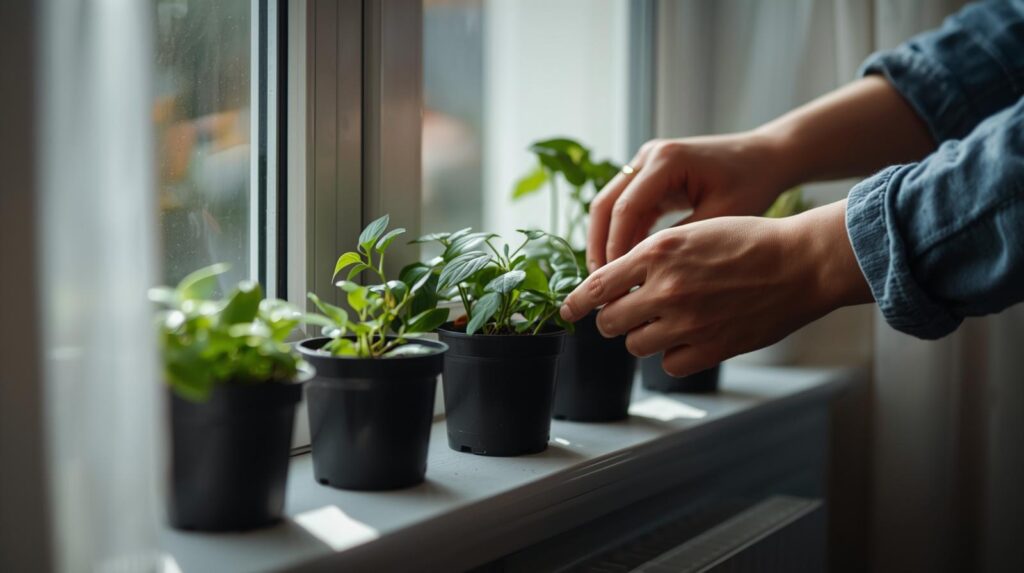
Stop buying plants and watching them die. The secret to a thriving indoor garden isn’t more plants — it’s the right three, in the right order, for the right reasons. The 3 Plant Rule can transform even a beginner’s plant collection into a success.
The Nursery Trap
It happens to almost everyone who gets into indoor gardening. You walk into a nursery on a Saturday morning with good intentions and walk out with six beautiful plants, a bag of specialty soil, and a vague plan to “figure it out.” By the following Sunday, three of them are yellowing. By the weekend after that, two more are gone. The sixth survives only because you forgot about it.
Gardening even at the apartment scale isn’t about how many plants you own. It’s about how much attention, observation, and energy you can realistically give them. Most beginners dramatically overestimate that number. They buy for passion and care for none of it.
The fix is simpler than you think: start with exactly three plants. Not two, not five. Three. Here’s why that number works, and which three to choose.
“When ten plants die, it’s a tragedy. When one plant dies, it’s a data point.”
Section 1: The Overwhelm Factor — Stop Collecting, Start Observing
Data vs. guilt
The problem with buying ten plants at once is that failure becomes demoralizing instead of instructive. When a single plant dies after you’ve been paying close attention to it, you learn something about watering frequency, light exposure, humidity, and root health. When six plants die in a week, you just feel terrible and quit.
Three plants are a manageable classroom. Each one teaches you something different. Each failure is a lesson rather than a disaster.
Learning the language
Every plant species has its own set of signals, such as drooping leaves, colour changes, crispy edges, and soft stems. These are the plants telling you something is wrong. But you can only learn to read those signals if you’re paying close enough attention, and you can only pay close enough attention if you aren’t managing a crowd.
Three plants give you the focus to actually notice. A dozen plants give you the overwhelm to notice nothing until it’s too late.
The clutter tax
There’s an aesthetic argument here, too. A dozen struggling, half-dead plants don’t make an apartment feel like a garden; they make it feel cluttered and slightly sad. Three healthy, well-placed plants make a space feel intentional. Designed, even. The goal isn’t volume. It’s vitality.
Section 2: The Core Three Strategy
Not all plants are equal starting points. The Core Three is a specific combination chosen to teach you three different, though essential, skills and to give you at least one early win to build confidence.
Plant One
The Tank — A Succulent or Snake Plant
Best options: Snake Plant (Sansevieria) or Jade Plant. These are nearly indestructible under normal conditions. They thrive on neglect, tolerate low light, and only need occasional watering. Their job in your Core Three isn’t just to survive, it’s to teach you that doing nothing is sometimes the right move. Most beginners kill plants by overwatering, not underwatering. The Tank rewires that instinct.
Plant Two
The Communicator — A Leafy Tropical
Best options: Peace Lily or Pothos. These plants are dramatically expressive when they need something. A thirsty Pothos will droop visibly, then perk back up within hours of being watered. That feedback loop is important for beginners. It teaches you to recognize physical cues, understand the relationship between water and light, and build the habit of regularly checking on your plants. The Communicator makes you a more attentive gardener.
Plant Three
The Worker — A Kitchen Herb
Best options: Mint or Chives. This one shifts the entire framing of the hobby. When you grow something you can actually use, you can snip a few chives onto your eggs and pull mint leaves for your drink. The effort stops feeling like maintenance and starts feeling rewarding. The Worker gives you a concrete return on your investment, which makes you more likely to stay engaged long enough to actually get good at this.
Section 3: Environment First, Credit Card Second
The most common beginner mistake isn’t choosing the wrong plant. It’s choosing the right plant for the wrong room. Before you buy anything, spend time understanding the environment you’re actually working with.
The light audit
Don’t guess where the sun hits. Spend a full day watching how light moves through your space, which windows get direct morning sun, which get indirect afternoon rays, which rooms are dim by 2 pm. Light is the single most important factor in indoor plant success, and most people dramatically overestimate how much light their apartment actually gets.
South-facing windows get the most light. East-facing windows get gentle morning sun. West-facing windows get strong midday light. North-facing windows are dim-light environments, plan accordingly.
The humidity reality check
Most apartments, especially in winter, are closer to a desert than a rainforest, thanks to forced-air heating and central HVAC systems. If you’re not prepared to run a humidifier or mist regularly, avoid humidity-loving plants like Calathea or Fiddle Leaf Figs. They’ll struggle constantly, and you’ll feel like a failure. Match the plant to your actual environment, not your aspirational one.
Matching your Core Three to your space
Once you’ve completed your light and humidity audit, choosing your three plants becomes much easier. Highlight, low humidity? Snake Plant, Pothos, and Chives. Lower light, willing to add a humidifier? Swap the Snake Plant for a Peace Lily. The point is to make decisions based on data, not on what looked beautiful at the nursery.
Conclusion: Success Is a Slow Build
The 3-Plant Rule isn’t a limitation; it’s a foundation. Mastering three different plants across three care profiles gives you a real understanding of what indoor plants need to thrive. Light, water, humidity, soil, and drainage, you learn all of it through close observation of a manageable number of living things.
Once those three are healthy and stable, once you’ve kept them alive through a full season and started to understand their rhythms, you’ve earned the right to add more. And when you do, you’ll do it differently. You’ll do a light audit first. You’ll check the humidity. You’ll buy one plant instead of six.
If you can keep three different species alive and healthy for six months, you’ve officially stopped being a plant killer. You’ve become a gardener. That’s the whole point of starting small, not to limit what you can grow, but to make sure you actually grow.
