
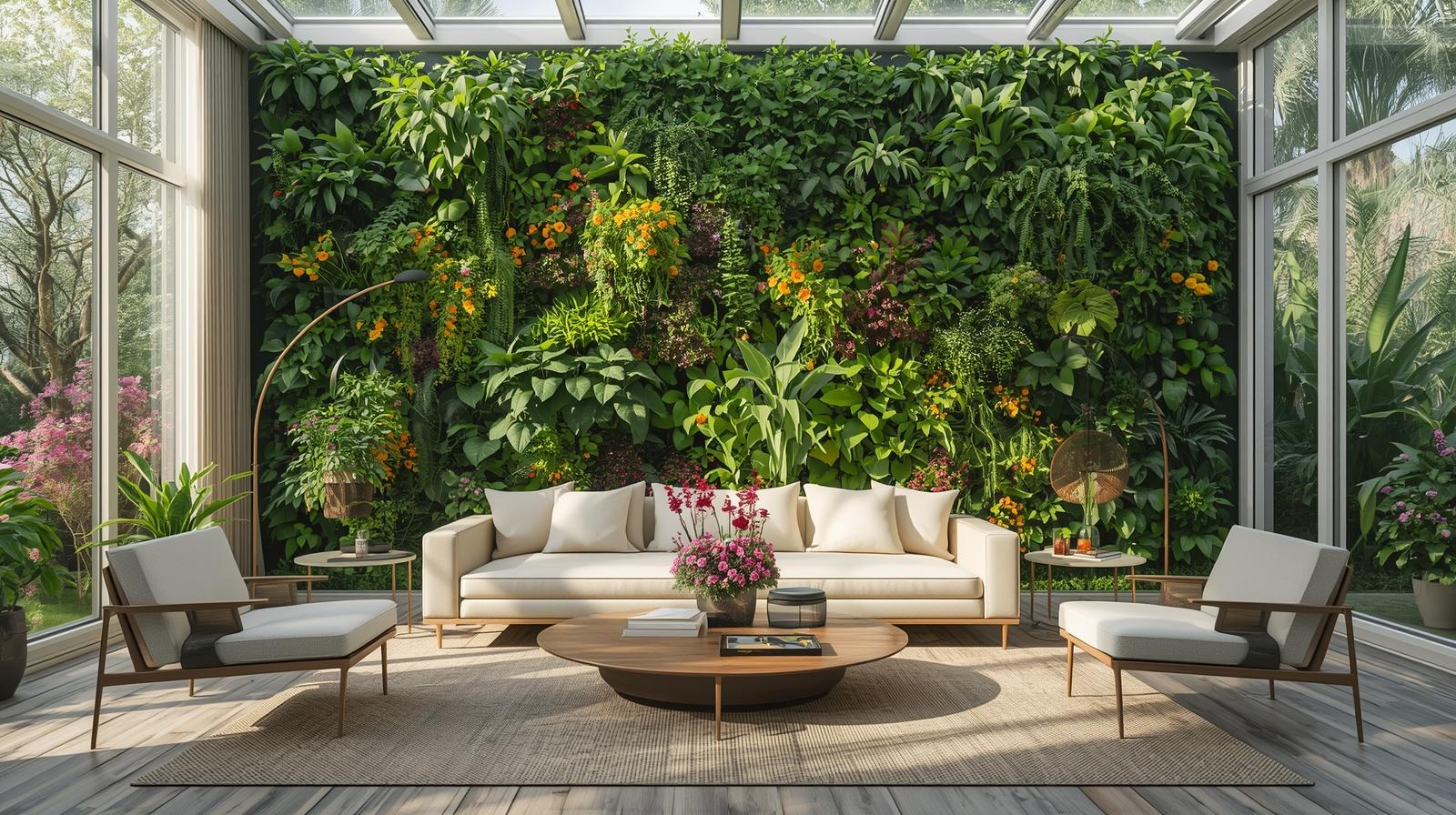

You don’t need a felt pocket system and a drainage pump to grow plants on your walls. Creating a Vertical Indoor Garden can be simple: you just need to get them off the floor — and keep your baseboards dry.
The Living Wall Myth
Pinterest has a lot to answer for. Scroll through any home inspiration board, and you’ll find gorgeous floor-to-ceiling green walls, lush, dense, impossibly green. What those photos don’t show is what happened six months later. You’ll find the leaks, the mould is behind the felt pockets, the fungus gnats, and even the landlord’s face. A vertical indoor garden is more challenging than it may seem.
Hydroponic wall systems, modular pocket planters, and drip-fed vertical gardens are impressive when they work, but they also require maintenance, waterproofing, and technical setup that most people are not reasonably prepared for. For every thriving living wall you see online, there are dozens that quietly come down after a ruined baseboard and a very unpleasant smell.
The good news is that you don’t need any of that. Vertical gardening, done well, is much simpler than the Pinterest version suggests. The goal isn’t to cover your walls in plants. The goal is to get your plants up off the floor, use your vertical space intentionally, and keep your home feeling clean and open rather than damp and overgrown.
“A wall covered entirely in plants doesn’t look like a garden. It looks like something went wrong.”
Section 1: The Power of Negative Space
Design first
There’s a counterintuitive truth at the heart of vertical gardening: more plants on a wall make a room feel smaller, not larger. A wall completely covered in greenery creates visual noise. Your eye has nowhere to rest. The room starts to feel enclosed, busy, and harder to relax in.
The empty space around a plant makes it visible. It’s what gives it presence. Cover the whole wall, and you lose that. You’ve traded a focal point for a texture.
The gallery approach
A better mental model is that of an art gallery. Galleries don’t hang paintings edge-to-edge. They use generous spacing so each piece can be seen on its own terms. Apply the same logic to wall-mounted plants. One well-placed plant on a wall, with breathing room around it, reads as intentional. It draws the eye. It improves the room.
Three plants crammed onto the same wall, with no space between them, reads as clutter. The plants themselves might be beautiful. The arrangement undoes them.
Keep eye level clear.
In a small apartment, the fastest way to make a room feel open is to keep the sightlines clear. Mount plants slightly above or below eye level rather than directly in the line of sight. This preserves the feeling of space while still using the wall. It’s a small adjustment that makes a noticeable difference.
Section 2: The Floating Method
Get rid of the floor shelf.
Tiered floor shelves are among the most popular plant display options, but they are also among the most counterproductive for small spaces. They eat floor space, collect dust on every surface, make vacuuming genuinely difficult, and tend to become catch-alls for everything that doesn’t have another home. If you can’t clean under it easily, it’s working against you.
The clean floor rule is simple: anything that sits on the floor should be there because it has to be, not because it’s convenient. Plants don’t have to be on the floor. Put them on the wall.
Wall-mounted rings
The simplest and most effective hardware for minimalist vertical gardening is the wall-mounted plant ring. These are exactly what they sound like: rings, usually black powder-coated steel, that mount directly to the wall and hold a standard nursery pot. The plant appears to float. There’s no shelf, no bracket, no visual bulk. Just the plant and the wall behind it.
They’re inexpensive, easy to install, and work with pots you already own. For most people, this is the only hardware they need.
Industrial and magnetic options
If your space has exposed metal surfaces a steel beam, a magnetic backsplash, a metal cabinet there are magnetic and industrial mounting options worth exploring. These work particularly well in loft-style or industrial spaces where the hardware becomes part of the aesthetic rather than something to hide. A raw steel ring on a steel beam looks intentional. On a painted drywall wall in a traditional apartment, you’d want something more refined.
Section 3: The No-Swamp Policy
Why automatic irrigation usually fails
Automated drip systems for vertical gardens are appealing in theory. In practice, they introduce a category of problems that hand watering simply doesn’t have. Drippers clog. Reservoirs overflow. Tubing disconnects at 2 am. And because the failure often happens slowly and invisibly, the damage to walls, baseboards, and floors is well underway before you notice anything is wrong.
If a vertical gardening system requires a pump and a reservoir, it isn’t really a garden anymore. It’s a plumbing project. And like most plumbing projects, it will eventually require your attention at the worst possible time.
The manual advantage
Taking a plant down from the wall, carrying it to the sink, watering it thoroughly, letting it drain completely, and hanging it back up takes about three minutes. It also guarantees that your walls stay dry, your roots don’t sit in standing water, and you actually look at the plant up close on a regular basis. This is key to success in an indoor vertical garden. That last part matters more than it sounds. Most plant problems are caught early when you’re handling the plant, but go unnoticed when you’re just glancing at it from across the room.
The cachepot system
The cleanest approach is to keep your plant in its original nursery pot for watering and drainage, and place it inside a sealed, decorative vessel for display. The outer pot handles the aesthetics. The inner pot handles the water. They never have to meet your wall at the same time. This setup also makes it easy to swap plants in and out as they go through different phases, without having to repot anything or change your wall hardware.
Section 4: Choosing the Right Plants for your Vertical Indoor Garden
Don’t fight physics
Not every plant belongs on a wall. Upright growers, heavy specimens, and plants that need frequent soil inspection are all better suited to surfaces you can easily access. The plants that work best vertically are the ones that either trail downward naturally or climb upward with a little guidance. Both types use vertical space actively rather than just sitting at an elevated height.
The Trailers
Pothos, Heartleaf Philodendron, and Hoya
Pothos and Heartleaf Philodendron are the workhorses of vertical indoor gardening. They’re forgiving, fast-growing, and look genuinely beautiful cascading down from a wall-mounted ring. Hoya is a slower option for people who want a more structured, architectural look without the rapid sprawl. All three are tolerant of the inconsistent watering that comes with a busy schedule, making them well-suited to a display method that requires taking them down to water.
The Climbers
Guided vertical growth with minimal hardware
For plants that climb rather than trail, a few clear command hooks or a spare wire trellis mounted in a corner can guide growth upward without adding visual clutter. This approach works particularly well in corners, where the plant can travel up two walls at once, creating a sense of height without dominating either surface. The key is to guide the increase rather than force it. A plant that’s been trained gently up a corner looks architectural. One that’s been crammed into a pocket planter and pointed at the ceiling just looks stressed.
Avoid wall pockets for herbs. Upright herbs planted in felt or fabric wall pockets tend to grow leggy and pale as they reach for light at an angle their roots weren’t designed for. Herbs do better on a windowsill or under a grow light than they do on a wall.
Improve Your Space, Not Your Stress
Vertical gardening works best when it’s treated as an editing exercise rather than a decorating one. The question isn’t how many plants you can fit on your walls. It’s how few plants, placed well, can change how a room feels.
Done right, a single trailing Pothos mounted at shoulder height on an otherwise bare wall adds life to a room without weighing it down. It creates a sense of lift. The floor stays clear, the sightlines stay open, and the plant gets to be the thing it actually is: something beautiful, in the right place, with enough space around it to be noticed.
Start with one floating plant. If it improves the room without complicating your Saturday cleaning routine, add a second. If it doesn’t, move it somewhere else. The whole point of keeping it simple is that simple things are easy to change.
