
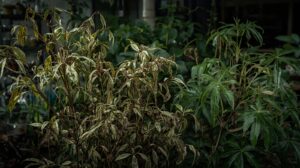
 I’ve killed more plants than you’ve probably ever owned. My indoor garden failed more times than I’d care to admit.
If you’re looking for a sanitized gardening blog that tells you to “love your plants enough and they’ll thrive,” you’re in the wrong place. Gardening, like any project, isn’t about feelings. It’s about systems. When a plant dies, it isn’t a moral failure. It’s a data point.
In my years of indoor gardening, I’ve managed to turn every common mistake into a catastrophic event. I’ve underwatered, overwatered, sun-scorched, and pest-infested my way to a library of “what not to do.”
If you’re staring at a brown, crispy mess in the corner of your living room, don’t throw it out just yet. Let’s look at the wreckage and turn it into a blueprint for your next attempt.
If you’re staring at a brown, crispy mess in the corner of your living room, don’t throw it out just yet. Let’s look at the wreckage and turn it into a blueprint for your next attempt.
1. The Over-Care Trap (The “Parenting” Error)
Most indoor gardeners fail because they treat plants like pets. They want to check on them, talk to them, and—most dangerously—water them on a schedule.
- The Data: Plants don’t care about your calendar. They care about their soil moisture. Sometimes, an Indoor Garden Failed because owners over-care for their plants.
- The Fix: Stop the weekly ritual. Stick your finger two inches into the dirt. If it’s damp, walk away. If you feel like you must do something, go dust the leaves. Your plant will thank you for the neglect.
2. The “Decorative Pot” Fallacy
We all bought the beautiful ceramic pot with no drainage hole because it matches the couch. It’s an aesthetic choice that’s essentially a death sentence.
- The Data: Without drainage, water sits at the bottom, rots the roots, and causes a slow, invisible death. In many cases, an indoor garden fails because of improper pot drainage.
- The Fix: The “pot-in-a-pot” method. Keep your plant in its ugly plastic nursery liner and hide it inside the pretty ceramic pot. If you can’t see the drainage hole, don’t use it.
3. Ignoring the “Light Reality.”
We buy plants because they look good in a dark corner of the room. Plants don’t care about your interior design. They are solar-powered machines.
- The Data: If a plant is ten feet away from a window, it is effectively in a cave.
- The Fix: Move the plant closer. If you can’t, stop buying plants that crave high light. Stop fighting biology—it’s a losing battle. Moreover, Indoor Garden Failed results occur when plants are kept too far from natural light.
4. The Fertilizer Overdose
When a plant looks “sad,” the instinct is to feed it. We think of fertilizer like a multivitamin. But fertilizer is not medicine; it is fuel. You don’t give a car more gas when the engine is broken; you give it a tune-up.
Fertilizer on a stressed or dying plant is like eating a double cheeseburger while you have the flu. Fertilize only when the plant is actively growing. If it’s dormant or dying, leave it alone.
- The Data: Fertilizer is not medicine. It is fuel. You don’t give a car more gas when the engine is broken; you give it a tune-up. Fertilizer on a stressed or dying plant is like eating a double cheeseburger while you have the flu.
- The Fix: Fertilize only when the plant is actively growing. If it’s dormant or dying, leave it alone. In summary, Indoor Garden Failed often because growers ignore these simple fixes.
5. Neglecting the Pest Inspection
We often blame ourselves for plant death when the real culprit is a microscopic invader.
- The Data: Spider mites and scale don’t wait for permission. They show up, move in, and start draining the life out of your plant while you’re wondering if you’re watering it correctly.
- The Fix: Treat every new plant like a biohazard. Isolate it for a week. Check the undersides of the leaves. Catching pests early is the difference between a minor cleanup and a total purge.
Failure is the Best Teacher
I don’t have a “green thumb.” I have a notebook full of post-mortems on dead plants and a system that actually works. Every time a plant died, I learned something about light, soil, or timing that the books never mentioned.
Failure can be a great teacher. I don’t have a “green thumb.” I have a notebook full of post-mortems on dead plants and a system that actually works.
Don’t be discouraged by the brown leaves. Take a photo, identify the failure, and adjust the variables. You aren’t failing, you’re just collecting the data required to succeed. Remember, your journey through each Indoor Garden Fail is part of the learning process.
Remember, your journey through each Indoor Garden Fail is part of the learning process.
